Gospodarczy cel zawarcia umowy jako kryterium oceny opodatkowania transakcji podatkiem od towarów i usług
DOI:
https://doi.org/10.33119/ASCASP.2021.1.4Słowa kluczowe:
VAT, umowy, cel gospodarczyAbstrakt
Celem artykułu jest opisanie, w jaki sposób porozumienia umowne stron transakcji mogą wpływać na kształt obowiązku podatkowego w podatku od towarów i usług. W szczególności chodzi o to, aby przedstawić, jakie znaczenie dla skutków podatkowych w VAT ma gospodarczy cel umowy. Warto było zweryfikować, jakie elementy stosunku prawnopodatkowego mogą zostać ukształtowane przez porozumienia umowne. W artykule wskazano również, kiedy – dla ukształtowania obowiązków w VAT – warunki umowne nie mogą być w ogóle brane pod uwagę. Jako metodę opisową wybrano orzecznictwo Trybunału Sprawiedliwości Unii Europejskiej, w którym wywodząc skutki podatkowe różnych zdarzeń gospodarczych, oceniono wpływ woli stron umowy na te skutki.
Bibliografia
Ciecierski, M. (2019). Czynność cywilnoprawna a kształtowanie obowiązku podatkowego w podatku od towarów i usług na przykładzie robót budowlanych i budowlano - montażowych. In: A. Franczak, A. Kaźmierczyk (Eds.), Prawo podatkowe w systemie prawa. Międzygałęziowe związki norm i instytucji prawnych (pp. 259–270). Warszawa: Wolters Kluwer Polska
Kasprzyk, K. & Verdun, M. (2019). Kiedy zbudowano piramidę Cheopsa – rozważania dotyczące momentu wykonania usługi budowlanej w świetle wyroku w sprawie Budimex. Przegląd Podatkowy, 7, pp. 14–22.
Wesołowska, A. (2019). Moment powstania obowiązku podatkowego VAT w przypadku usług budowlanych lub budowlano-montażowych. Glosa do wyroku TS z dnia 2 maja 2019 r. C-224/18. LEX/el.
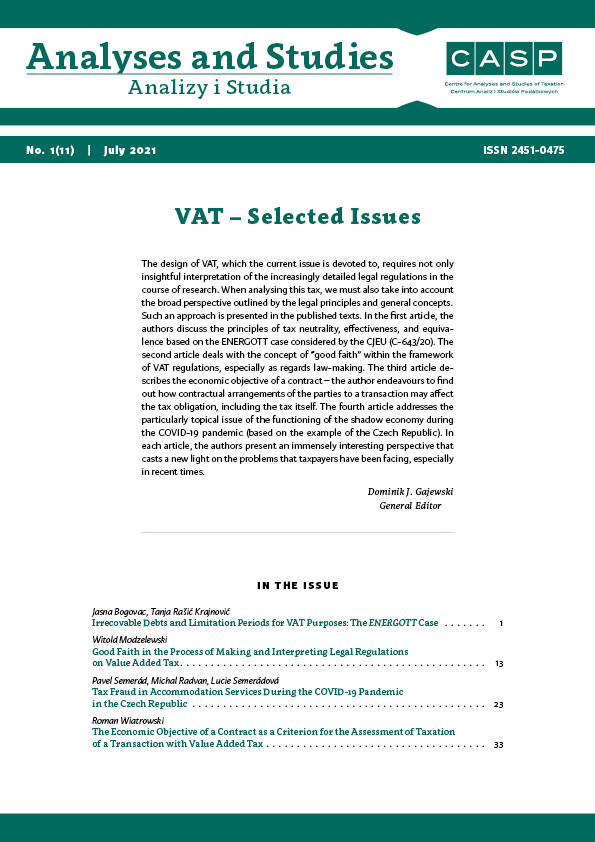
Pobrania
Opublikowane
Jak cytować
Numer
Dział
Licencja
Autorzy zachowują autorskie prawa majątkowe do swoich utworów oraz udzielają czasopismu prawa pierwszej publikacji. Jednocześnie artykuły są udostępniane na warunkach licencji Creative Commons Uznanie autorstwa – Użycie niekomercyjne 4.0 Międzynarodowe (CC BY-NC 4.0), która zezwala osobom trzecim na ich rozpowszechnianie do celów niekomercyjnych, pod warunkiem wskazania autorstwa oraz informacji o pierwszej publikacji w niniejszym czasopiśmie.