Pasek boczny artykułu
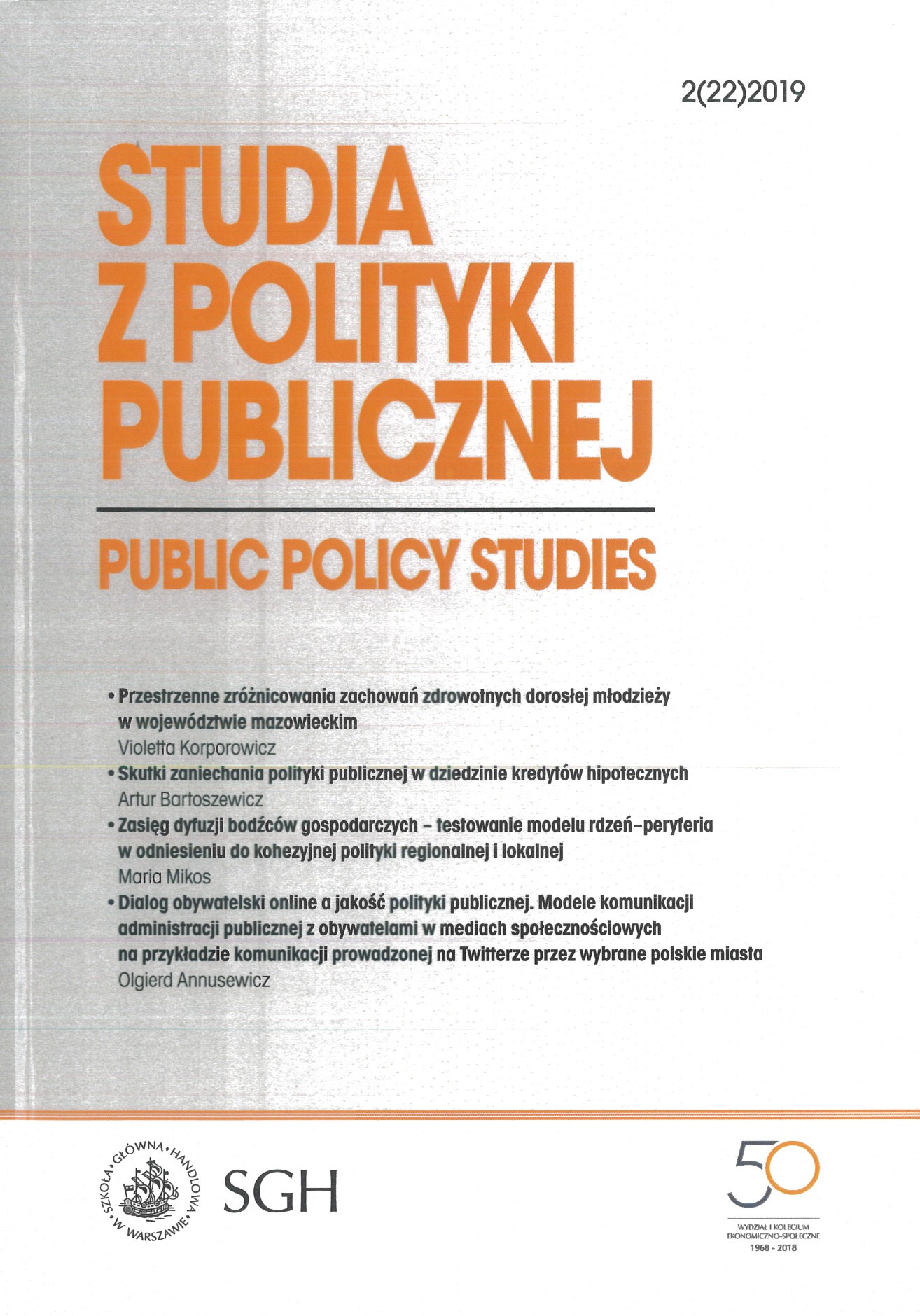
Treść głównego artykułu
Abstrakt
Celem polityki przestrzennej jest zarówno ochrona określonych wartości przestrzeni, jak i racjonalne jej kształtowanie przez stymulowanie procesów społecznych i gospodarczych. Działania ochronne obejmują dążenie do zachowania równowagi pomiędzy elementami gospodarczymi, społecznymi czy środowiskowymi. Aby planowanie przestrzenne było skutecznym narzędziem polityki publicznej, musi ono obejmować wszystkie aspekty życia społeczno-gospodarczego. W nurcie społecznym jednymi z najistotniejszych są decyzje w zakresie kształtowania zdrowia poprzez zmniejszanie różnic w dostępie do usług zdrowotnych i edukacyjnych w regionach, w tym do edukacji zdrowotnej. Edukacja ta może się przyczynić do kształtowania prawidłowych postaw zdrowotnych oraz eliminować zróżnicowania w tym zakresie między młodzieżą mieszkającą w miastach a mieszkającą na wsiach. Dla określenia przestrzennych (miasto–wieś) zróżnicowań w kształtowaniu postaw zdrowotnych zrealizowano badanie terenowe pełnoletniej młodzieży różnego typu szkół ponadpodstawowych, tzn. szkół zawodowych, techników i szkół ogólnokształcących w województwie mazowieckim. W świetle badania założona teza o istnieniu zróżnicowań w zachowaniach zdrowotnych między młodzieżą mieszkającą w miastach a mieszkającą na wsiach nie została potwierdzona, natomiast różnice pojawiły się w zachowaniach zdrowotnych uczniów różnych typów szkół. Okazało się, że badana młodzież z województwa mazowieckiego ucząca się w szkołach zawodowych słabiej niż młodzież uczęszczająca do liceów ogólnokształcących i techników rozpoznaje sytuacje grożące zdrowiu w postaci czy to gorszego sposobu odżywiania, np. spożywania mniej warzyw, czy częstotliwości kontaktów z substancjami psychoaktywnymi. Ogólnym wnioskiem z badań jest to, że najistotniejsze wydaje się promowanie i kształtowanie wiedzy na temat zdrowia poprzez edukację stylu życia, szczególnie młodzieży uczęszczającej do szkół zawodowych, jako tych potrzebujących najsilniejszego wsparcia merytorycznego i infrastrukturalnego.
Słowa kluczowe
Szczegóły artykułu
Czasopismo „Studia z Polityki Publicznej/Public Policy Studies” zapewnia dostęp do treści artykułów w trybie otwartego dostępu (Open Access) na zasadach licencji Creative Commons Uznanie autorstwa 4.0 Międzynarodowe (CC BY 4.0).


Więcej informacji: Polityka Open Access czasopisma "Studia z Polityki Publicznej/Public Policy Studies"
Referencje
- Apanowicz, J. (2003). Metodologia nauk. Toruń: TNOiK „Dom Organizatora”.
- Borsa, M. (2004). Gospodarka i polityka przestrzenna, cz. 2. Polityka przestrzenna. Warszawa: Wyższa Szkoła Społeczno-Ekonomiczna w Warszawie.
- Handbook of development economics (2010). Amsterdam: Elsevier, North Holland Oxford.
- Karski, J.B. (2003). Praktyka i teoria promocji zdrowia. Wybrane zagadnienia. Warszawa: CeDeWu
- Korporowicz, V. (2015). Polityka zdrowotna w systemie nauk o polityce publicznej. Studia z Polityki Publicznej, 1(5).
- Korporowicz, V. (2017). Zarządzanie progresywne w zdrowiu publicznym jako przejaw public governance, w: Marciniak, M., Szczupaczyński, J. (red.) Nowe idee zarządzania publicznego. Wyzwania i dylematy. Warszawa: Dom Wydawniczy Elipsa.
- Korporowicz, V. (2018). Young adults, health behaviours: an element of health policy in the light of the „Youth of Warsaw” study. The Quarterly of the Collegium of Socio-Economics Studies and Works, 3A (35).
- Kosycarz, E., Walendowicz, K. (red.) (2018). Świadomość zdrowotna jako kluczowy determinant stanu zdrowia. Studia i Prace Kolegium Zarządzania i Finansów, 165.
- Mental illness. Invisible but devastating. (2016/2017). Africa Renewal.
- Norton, I.M., Rucker, D. (red.) (2015). The Cambridge Handbook of consumer psychology. New York: Cambridge University Press.
- Nosko, J. (2005). Zachowania zdrowotne i zdrowie publiczne. Łódź: IMP.
- Picket, K.E. (red.) (2009). Health and inequality, Vol. 2, Health inequalities, causes and pathways. London, New York: Routledge.
- Raport z badań. Polacy o swoim zdrowiu oraz prozdrowotnych zachowaniach i aktywnościach. (2012). Warszawa: CBOS.
- Sachs J.D. (2008). Common wealth. Economics for a crowed planet. London: Penguin Books.
- Sorensen K. et al. (2012). Health literacy and public health: a systematic review and integration of definitions and models. BMC Public Health, 1(80).
- Stiglitz J.E. (2015). Cena nierówności. W jaki sposób dzisiejsze podziały zagrażają naszej przyszłości. Warszawa: Wydawnictwo Krytyki Politycznej.
- Strong, W.B. et al. (2005). Evidence based physical activity for school-age youth.
- Volanders, A.E., Paasche-Orlow, M.K. (2007). Health literacy, health inequality and a just health care system. American Journal of Bioethics, 7.
- Wallace, W.L. (1989). Toward a disciplinary matrix in sociology, w: Smelser N.J. (red.), Handbook of sociology. Newbury Park, London, New Delhi: SAGE Publ.
- Wyniki badań 2010 (2011). Raport techniczny. Warszawa: HBSC.
- http://www.cbos.pl/SPISKOM.POL/2016/K_138_16. PDF (dostęp: 20.02.2019).
- http://www.cie.men.gov.pl/index.php/sio-wykaz-szkol-i-placowek/26-wykaz-wg wojewodztw.html (dostęp: 3.04.2017).
Referencje
Apanowicz, J. (2003). Metodologia nauk. Toruń: TNOiK „Dom Organizatora”.
Borsa, M. (2004). Gospodarka i polityka przestrzenna, cz. 2. Polityka przestrzenna. Warszawa: Wyższa Szkoła Społeczno-Ekonomiczna w Warszawie.
Handbook of development economics (2010). Amsterdam: Elsevier, North Holland Oxford.
Karski, J.B. (2003). Praktyka i teoria promocji zdrowia. Wybrane zagadnienia. Warszawa: CeDeWu
Korporowicz, V. (2015). Polityka zdrowotna w systemie nauk o polityce publicznej. Studia z Polityki Publicznej, 1(5).
Korporowicz, V. (2017). Zarządzanie progresywne w zdrowiu publicznym jako przejaw public governance, w: Marciniak, M., Szczupaczyński, J. (red.) Nowe idee zarządzania publicznego. Wyzwania i dylematy. Warszawa: Dom Wydawniczy Elipsa.
Korporowicz, V. (2018). Young adults, health behaviours: an element of health policy in the light of the „Youth of Warsaw” study. The Quarterly of the Collegium of Socio-Economics Studies and Works, 3A (35).
Kosycarz, E., Walendowicz, K. (red.) (2018). Świadomość zdrowotna jako kluczowy determinant stanu zdrowia. Studia i Prace Kolegium Zarządzania i Finansów, 165.
Mental illness. Invisible but devastating. (2016/2017). Africa Renewal.
Norton, I.M., Rucker, D. (red.) (2015). The Cambridge Handbook of consumer psychology. New York: Cambridge University Press.
Nosko, J. (2005). Zachowania zdrowotne i zdrowie publiczne. Łódź: IMP.
Picket, K.E. (red.) (2009). Health and inequality, Vol. 2, Health inequalities, causes and pathways. London, New York: Routledge.
Raport z badań. Polacy o swoim zdrowiu oraz prozdrowotnych zachowaniach i aktywnościach. (2012). Warszawa: CBOS.
Sachs J.D. (2008). Common wealth. Economics for a crowed planet. London: Penguin Books.
Sorensen K. et al. (2012). Health literacy and public health: a systematic review and integration of definitions and models. BMC Public Health, 1(80).
Stiglitz J.E. (2015). Cena nierówności. W jaki sposób dzisiejsze podziały zagrażają naszej przyszłości. Warszawa: Wydawnictwo Krytyki Politycznej.
Strong, W.B. et al. (2005). Evidence based physical activity for school-age youth.
Volanders, A.E., Paasche-Orlow, M.K. (2007). Health literacy, health inequality and a just health care system. American Journal of Bioethics, 7.
Wallace, W.L. (1989). Toward a disciplinary matrix in sociology, w: Smelser N.J. (red.), Handbook of sociology. Newbury Park, London, New Delhi: SAGE Publ.
Wyniki badań 2010 (2011). Raport techniczny. Warszawa: HBSC.
http://www.cbos.pl/SPISKOM.POL/2016/K_138_16. PDF (dostęp: 20.02.2019).
http://www.cie.men.gov.pl/index.php/sio-wykaz-szkol-i-placowek/26-wykaz-wg wojewodztw.html (dostęp: 3.04.2017).