Pasek boczny artykułu
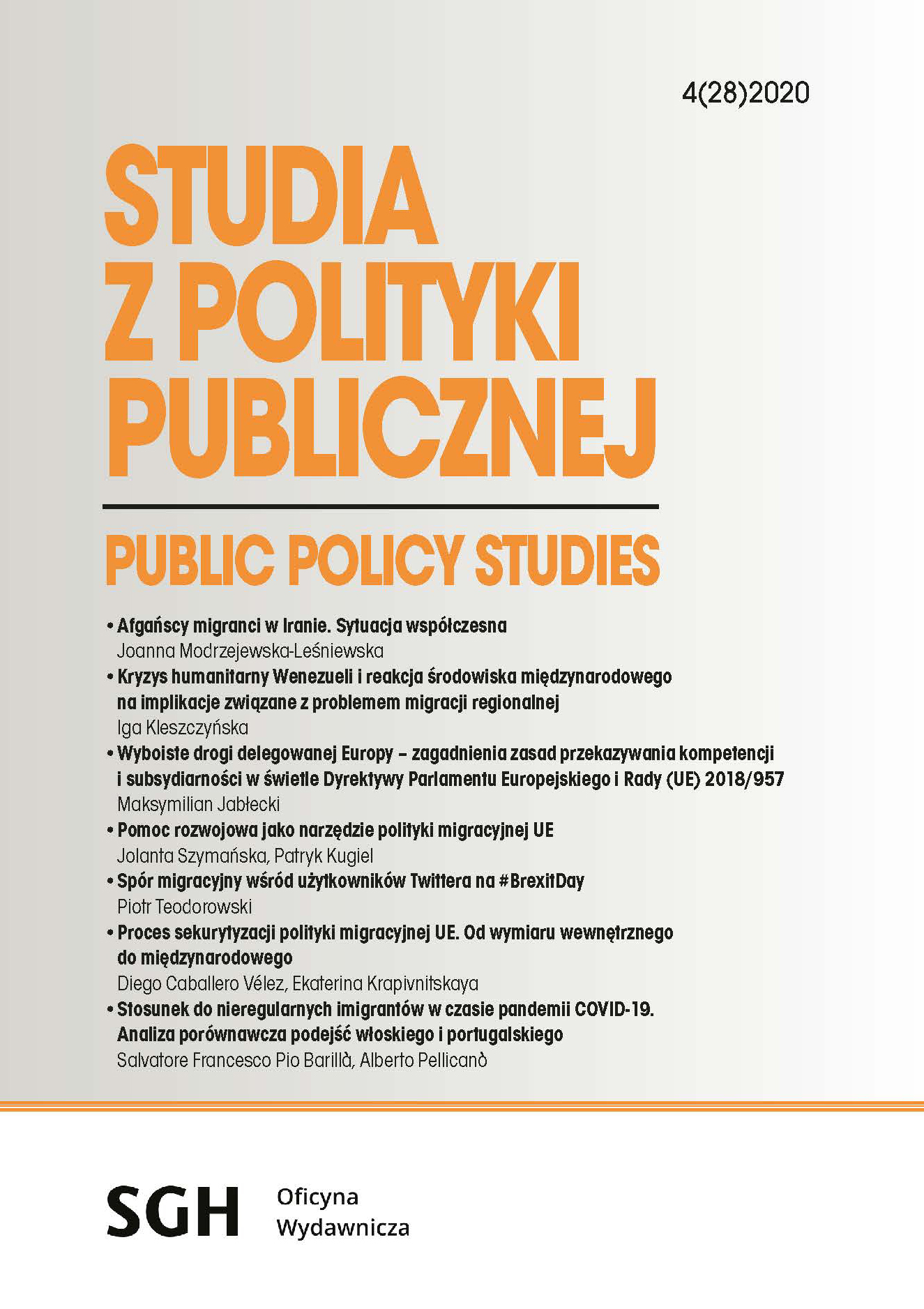
Treść głównego artykułu
Abstrakt
Celem badania jest analiza, czy zasady przekazywania kompetencji i subsydiarności w kontekście rozwiązań prawnych wprowadzonych Dyrektywą Parlamentu Europejskiego i Rady (UE) 2018/957 zmieniającą Dyrektywę 96/71 dotyczącą delegowania pracowników należy uznać za uzasadnione i proporcjonalne. Przedstawione argumenty wykazują, że zasada subsydiarności jest jedną z podstawowych zasad prowadzenia polityki gospodarczej w Unii Europejskiej. Na tej podstawie zbadano, czy uprawnienia polityczne powinny być delegowane na najniższy możliwy szczebel władzy zbliżony do obywateli, których dotyczy polityka - chyba że istnieją niezaprzeczalne korzyści z prowadzenia jej na wyższym szczeblu przy ściślejszej koordynacji. Należy rozważyć, czy propozycja Komisji Europejskiej ma inny cel niż deklarowany, a tym samym, czy narusza ona zasadę proporcjonalności. Udowodniono, że potrzebne są inteligentne i jasne przepisy dostosowane do szybko rosnącej mobilności przedsiębiorstw i obywateli UE, które zapobiegną postępującej utracie konkurencyjności rynku UE, przyśpieszą konwergencję społeczną i uniemożliwią nielegalną działalność szarej strefy wpływającej na sytuację pracowników migrujących wewnątrz UE. Powyższe kwestie i wnioski mogą, zdaniem autora, skłaniać do refleksji nad wagą tego, że podział kompetencji między państwami członkowskimi a instytucjami unijnymi jest ostatecznie decyzją polityczną, która pojawia się w kontekście konfliktu interesów, i wskazują, że analizy ekonomiczne mogą jedynie dostarczyć argumentów za lub przeciw centralizacji polityki. Ponadto należy podkreślić, że integracja jest procesem dynamicznym, dlatego wyniki analiz dotyczących uzasadnienia stosowania zasady subsydiarności mogą prowadzić do rozbieżnych ocen przez zainteresowane Państwa Członkowskie w czasie, w którym dynamicznie zmieniają się warunki funkcjonowania gospodarek.
Słowa kluczowe
Szczegóły artykułu
Czasopismo „Studia z Polityki Publicznej/Public Policy Studies” zapewnia dostęp do treści artykułów w trybie otwartego dostępu (Open Access) na zasadach licencji Creative Commons Uznanie autorstwa 4.0 Międzynarodowe (CC BY 4.0).


Więcej informacji: Polityka Open Access czasopisma "Studia z Polityki Publicznej/Public Policy Studies"
Referencje
- Case C-113/89 Rush Portuguesa Lda v Office national d'immigration.
- Case C-19/67 Soziale Verzekeringsbank v Van Der Vecht.
- Case C-215/01 Bruno Schnitzer.
- Case C-341/05 Laval un Partneri Ltd.
- Case C-35/70 Manpower v Caisse primaire d'assurance maladie de Strasbourg. Case C-396/13 Sahkoalojen ammattiliitto ry v Elektrobudowa Spółka Akcyjna. Case C-43/93 Raymond Vander Elst v Office des Migrations Internationales.
- Case C-620/18 Hungary v European Parliament and Council of the European Union.
- Case C-626/18 Republic of Poland v European Parliament and Council of the European Union.
- Ciancio, A. (2020). Why we could and should discuss about European constitutional law. In: A. Kłos, J. Misiuna, M. Pachocka, A. Szczerba-Zawada (Eds.), Connecting the European Union of shared aims, freedoms, values, and responsibilities. European Union and its values: freedom, solidarity, democracy: 9-16. Warsaw: CeDeWu.
- Court of Justice of the European Union Press Release No 63/20, Luxembourg, 28 May 2020. Retrieved from: https://curia.europa.eu/jcms/upload/docs/application/pdf/2020-05/cp200063en.pdf (accessed: 30.05.2020).
- Directive 2014/67/EU of the European Parliament and of the Council of 15 May 2014 on the enforcement of Directive 96/71/EC concerning the posting of workers in the framework of the provision of services and amending Regulation (EU) No 1024/2012 on administrative cooperation through the Internal Market Information System ('the IMI Regulation') [2014] OJ L 159, 28.5.2014.
- Directive No 2018/957 of the European Parliament and of the Council of 28 June 2018 amending Directive 96/71/EC concerning the posting of workers in the framework of the provision of services [2018] OJ L 173, 9.7.2018.
- Directive No 96/71/EC of the European Parliament and of the Council of 16 December 1996 concerning the posting of workers in the framework of the provision of services [1996] OJ L 18, 21.1.1997.
- European Commission, Impact Assessment accompanying the document "Proposal for a Directive of the European Parliament and the Council amending Directive 96/71/EC concerning the posting of workers in the framework of the provision of services," COM (2016) 128 final.
- Fromage, D., Kreilinger, V. (2017). National parliaments' third yellow card and the struggle over the revision of the Posted Workers Directive. European Journal of Legal Studies, 10(1): 126.
- Gelauff, G. (2008). Subsidiarity for Better Economic Reform? In: G. Gelauff, I. Grilo, A. Lejour (Eds.), Subsidiarity and Economic Reform in Europe: 1-18. Berlin, Heidelberg: Springer.
- Gwiazda, A. (2020). Posting of workers after 30 July 2020 Legal Alert. Retrieved from: https://www.kochanski.pl/en/posting-of-workers-after-30-july-2020-legal-alert/ (accessed: 30.07.2020).
- Lisicki, R. (2016). Analiza: Europejski spór o delegowanie pracowników. Retrieved from: http://www.instytutobywatelski.pl/25303/komentarze/nauka-i-praca/analiza-europejski-spor-o-delegowanie-pracownikow (accessed: 5.03.020).
- Maslauskaite, K. (2013). Social Competition in the EU: Myths and Realities. Jacques Delores Institute Notre Europe: 10.
- Mataija, M. (2009). The Role of the National Parliaments. In: S. Rodin, T. Ćapeta, I. Goldner Lang (Eds.), Reform of the European Union - The Lisbon Treaty: 153. Zagreb: Narodne novine.
- Misiuna, J., Pachocka, M. (2018). The EU and U.S. approaches towards irregular immigration. Studia Ekonomiczne. Zeszyty Naukowe Uniwersytetu Ekonomicznego w Katowicach, 372: 220-234.
- Opinion of Advocate General Manuel Campos Sanchez-Bordony delivered on 28 May 2020, Case C-620/18 Hungary v. The EP and the Council, ECLI:EU:C:2020:392.
- Opinion of Advocate General Manuel Campos Sanchez-Bordony delivered on 28 May 2020, Case C-626/18 Poland v. The EP and the Council, ECLI:EU:C:2020:394.
- Opinion of Advocate General Nils Wahl delivered on 18 September 2014, Case C-396/13
- Sahkoalojen ammattiliitto ry v Elektrobudowa Spółka Akcyjna; par. 30, ECLI:EU:C:2014:2236.
- Opinion of the Senate of the Republic of Poland of 29 April 2016 on non-compliance with the subsidiarity principle of the draft directive of the European Parliament and of the Council amending Directive 96/71 /EC of the European Parliament and of the Council of 16 December 1996 concerning the posting of workers in the framework of the provision of services.
- The Briefing on the revision of the Posting of Workers Directive issued by European Parliament. Retrieved from: https://www.europarl.europa.eu/RegData/etudes/BRIE/2017/607346/IPOL_BRI%282017%29607346_EN.pdf (accessed: 19.03.2020).
- Treaty on the Functioning of the European Union (Official Journal of the EU C 202 of 7.06.2016: 47).
- van Hoek, A., Houwerzijl, M. (2012). 'Posting' and 'Posted Workers': The Need for Clear Definitions of Two Key Concepts of the Posting of Workers Directive. Cambridge Yearbook of European Legal Studies, 14: 419-451.
Referencje
Case C-113/89 Rush Portuguesa Lda v Office national d'immigration.
Case C-19/67 Soziale Verzekeringsbank v Van Der Vecht.
Case C-215/01 Bruno Schnitzer.
Case C-341/05 Laval un Partneri Ltd.
Case C-35/70 Manpower v Caisse primaire d'assurance maladie de Strasbourg. Case C-396/13 Sahkoalojen ammattiliitto ry v Elektrobudowa Spółka Akcyjna. Case C-43/93 Raymond Vander Elst v Office des Migrations Internationales.
Case C-620/18 Hungary v European Parliament and Council of the European Union.
Case C-626/18 Republic of Poland v European Parliament and Council of the European Union.
Ciancio, A. (2020). Why we could and should discuss about European constitutional law. In: A. Kłos, J. Misiuna, M. Pachocka, A. Szczerba-Zawada (Eds.), Connecting the European Union of shared aims, freedoms, values, and responsibilities. European Union and its values: freedom, solidarity, democracy: 9-16. Warsaw: CeDeWu.
Court of Justice of the European Union Press Release No 63/20, Luxembourg, 28 May 2020. Retrieved from: https://curia.europa.eu/jcms/upload/docs/application/pdf/2020-05/cp200063en.pdf (accessed: 30.05.2020).
Directive 2014/67/EU of the European Parliament and of the Council of 15 May 2014 on the enforcement of Directive 96/71/EC concerning the posting of workers in the framework of the provision of services and amending Regulation (EU) No 1024/2012 on administrative cooperation through the Internal Market Information System ('the IMI Regulation') [2014] OJ L 159, 28.5.2014.
Directive No 2018/957 of the European Parliament and of the Council of 28 June 2018 amending Directive 96/71/EC concerning the posting of workers in the framework of the provision of services [2018] OJ L 173, 9.7.2018.
Directive No 96/71/EC of the European Parliament and of the Council of 16 December 1996 concerning the posting of workers in the framework of the provision of services [1996] OJ L 18, 21.1.1997.
European Commission, Impact Assessment accompanying the document "Proposal for a Directive of the European Parliament and the Council amending Directive 96/71/EC concerning the posting of workers in the framework of the provision of services," COM (2016) 128 final.
Fromage, D., Kreilinger, V. (2017). National parliaments' third yellow card and the struggle over the revision of the Posted Workers Directive. European Journal of Legal Studies, 10(1): 126.
Gelauff, G. (2008). Subsidiarity for Better Economic Reform? In: G. Gelauff, I. Grilo, A. Lejour (Eds.), Subsidiarity and Economic Reform in Europe: 1-18. Berlin, Heidelberg: Springer.
Gwiazda, A. (2020). Posting of workers after 30 July 2020 Legal Alert. Retrieved from: https://www.kochanski.pl/en/posting-of-workers-after-30-july-2020-legal-alert/ (accessed: 30.07.2020).
Lisicki, R. (2016). Analiza: Europejski spór o delegowanie pracowników. Retrieved from: http://www.instytutobywatelski.pl/25303/komentarze/nauka-i-praca/analiza-europejski-spor-o-delegowanie-pracownikow (accessed: 5.03.020).
Maslauskaite, K. (2013). Social Competition in the EU: Myths and Realities. Jacques Delores Institute Notre Europe: 10.
Mataija, M. (2009). The Role of the National Parliaments. In: S. Rodin, T. Ćapeta, I. Goldner Lang (Eds.), Reform of the European Union - The Lisbon Treaty: 153. Zagreb: Narodne novine.
Misiuna, J., Pachocka, M. (2018). The EU and U.S. approaches towards irregular immigration. Studia Ekonomiczne. Zeszyty Naukowe Uniwersytetu Ekonomicznego w Katowicach, 372: 220-234.
Opinion of Advocate General Manuel Campos Sanchez-Bordony delivered on 28 May 2020, Case C-620/18 Hungary v. The EP and the Council, ECLI:EU:C:2020:392.
Opinion of Advocate General Manuel Campos Sanchez-Bordony delivered on 28 May 2020, Case C-626/18 Poland v. The EP and the Council, ECLI:EU:C:2020:394.
Opinion of Advocate General Nils Wahl delivered on 18 September 2014, Case C-396/13
Sahkoalojen ammattiliitto ry v Elektrobudowa Spółka Akcyjna; par. 30, ECLI:EU:C:2014:2236.
Opinion of the Senate of the Republic of Poland of 29 April 2016 on non-compliance with the subsidiarity principle of the draft directive of the European Parliament and of the Council amending Directive 96/71 /EC of the European Parliament and of the Council of 16 December 1996 concerning the posting of workers in the framework of the provision of services.
The Briefing on the revision of the Posting of Workers Directive issued by European Parliament. Retrieved from: https://www.europarl.europa.eu/RegData/etudes/BRIE/2017/607346/IPOL_BRI%282017%29607346_EN.pdf (accessed: 19.03.2020).
Treaty on the Functioning of the European Union (Official Journal of the EU C 202 of 7.06.2016: 47).
van Hoek, A., Houwerzijl, M. (2012). 'Posting' and 'Posted Workers': The Need for Clear Definitions of Two Key Concepts of the Posting of Workers Directive. Cambridge Yearbook of European Legal Studies, 14: 419-451.