Article Sidebar
Main Article Content
Abstract
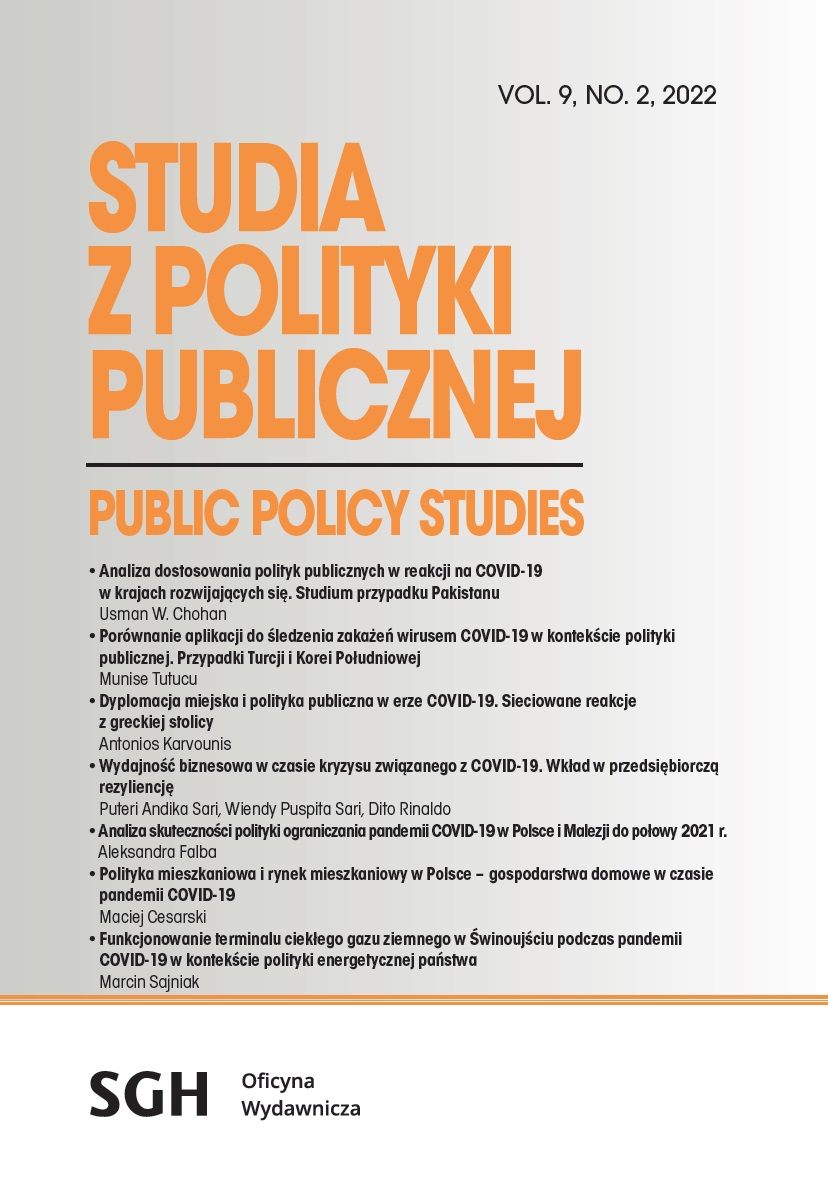
The healthcare systems of almost every country have been facing an unprecedented crisis since the beginning of the COVID-19 pandemic in March 2020. In response, numerous countries have designed and launched their unique applications to inform their citizens about COVID-19 and to follow their health situation. While South Korea has been showing an effective fight against COVID-19, Turkey is one of the most affected ones by the virus. This paper aims to identify key differences and similarities between the contact tracing apps that are used by Turkey and South Korea during COVID-19. In this way, it addresses how two members of the Organization for Economic Co-operation and Development (OECD), one developing (Turkey) and other developed (South Korea) countries, integrated their public policies and crisis management responses with the mobile phone applications and at what scale they are successful. Also, this paper investigates how these differences/similarities between their applications have affected their paths in the pandemic. Comparing their applications, it discusses policy-making processes, technological differences, and contact tracing strategies with policy recommendations for other countries.
Keywords
Article Details
The journal of “Studia z Polityki Publicznej/Public Policy Studies” provides access to the content of articles in the Open Access mode on the basis of the Creative Commons license Attribution 4.0 International (CC BY 4.0).


More information: Open Access Policy of the "Studia z Polityki Publicznej/Public Policy Studies"
References
- Ahn, P. D., & Wickramasinghe, D. (2021). Pushing the limits of accountability: big data analytics containing and controlling COVID-19 in South Korea. Accounting, Auditing and Accountability Journal, 34 (6), 1320-1331. DOI: 10.1108/AAAJ-08-2020-4829
- Anglemyer, A. (2020). Digital contact tracing technologies in epidemics: A rapid review. Saudi Medical Journal, 41 (9), 1028. DOI: 10.1002/14651858. CD013699
- Barriga, A. do C., Martins, A. F., Simoes, M. J., & Faustino, D. (2020). The COVID-19 pandemic: Yet another catalyst for governmental mass surveillance? Social Sciences & Humanities Open, 2 (1), 100096. DOI: 10.1016/j.ssaho.2020.100096
- BBC News Türkçe (2020, May 13). Koronavirüs: Türkiye ve dünyadaki temas takip uygulamalari güvenli mi, hak ve mahremiyet ihlallerine yol açar mi?, https://www.bbc.com/turkce/haberler-dunya-52638919 (accessed: 25.10.2021).
- Boudreaux, B., DeNardo, M. A., Denton, S. W., Sanchez, R., & Feistel, K. (2020). Data privacy during pandemics. Santa Monica, CA: RAND Corporation. DOI: 10.7249/RRA365-1
- Directorate of Communications; The Republic of Türkiye (2020). Pandemic isolation tracking project developed against COVID-19, https://www.iletisim.gov.tr/english/duyurular/detay/pandemic-isolation-tracking-project-developed-against-covid-19 (accessed: 17.10.2021).
- Filyasyon ve izolasyon takibi (1.4.1) (2020). [Mobile app]. Google Play, https://play.google.com/store/apps/details?id=tr.gov.saglik.fitas (accessed: 26.09.2021).
- FITAS (2020, Oct 2). Saglik Bilgi Sistemleri Genel Müdürlügü, https://sbsgm.saglik.gov.tr/TR,73584/fitas.html (accessed: 26.09.2021).
- Google (2020, May 20). Exposure notification API launches to support public health agencies. Google, https://blog.google/inside-google/company-announcements/apple-google-exposure-notification-api-launches/ (accessed: 24.10.2021).
- Government of the Republic of Korea (2020). All About Korea's Response to COVID-19. Seoul: Ministry of Foreign Affairs.
- Hayat eve sigar (2020a). https://hayatevesigar.saglik.gov.tr (accessed: 26.09.2021).
- Hayat eve sigar (2.3.8) (2020b). [Mobile app]. Google Play, https://play.google.com/store/apps/details?id=tr.gov.saglik.hayatevesigar&hl=tr&gl=US (accessed: 20.10.2021).
- Hayat eve sigar (2020c). Privacy policy, https://hayatevesigar.saglik.gov.tr/gizlilik_politikasi_index.html (accessed: 17.10.2021).
- Hayat eve sigar (2021, June 10). [Tweet]. Twitter. https://twitter.com/_hayatevesigar/status/1402976230882881540 (accessed: 20.10.2021).
- HealthPass (1.0.6) (2021). [Mobile app]. Google Play, https://play.google.com/store/apps/details?id=com.healthpass.global (accessed: 26.09.2021).
- Hogan, K., Macedo, B., Macha, V., Barman, A., & Jiang, X. (2021). Contact Tracing Apps: Lessons Learned on Privacy, Autonomy, and the Need for Detailed and Thoughtful Implementation. JMIR Medical Informatics, 9 (7), e27449. DOI: 10.2196/27449
- Joo, J., & Shin, M. M. (2020). Resolving the tension between full utilization of contact tracing app services and user stress as an effort to control the COVID-19 pandemic. Service Business, 14 (4), 461-478. DOI: 10.1007/s11628-020-00424-7
- Kaya, E. K. (2020). Safety and Privacy in the Time of Covid-19: Contact Tracing Applications. Istanbul: Centre for Economics and Foreign Policy Studies, http://www.jstor.org/stable/resrep26089 (accessed: 26.01.2022).
- Kim, J., Ah-Reum An, J., Oh, S., Oh, J., & Lee, J. (2021, March 5). Emerging COVID-19 success story: South Korea learned the lessons of MERS. Our World in Data, https://ourworldindata.org/covid-exemplar-south-korea (accessed: 26.01.2022).
- Kim, Y., Chen, Y., & Liang, F. (2021). Engineering care in pandemic technogovernance: The politics of care in China and South Korea's COVID-19 tracking apps. New Media and Society. OnlineFirst. DOI: 10.1177/14614448211020752.
- Kocaeli Il Saglik Müdürlügü (2020). Koronada izolasyona uymayanlara para cezasi, https://kocaeliism.saglik.gov.tr/TR,188491/koronada-izolasyona-uymayanlara-para-cezasi.html (accessed: 19.10.2021).
- Korona Önlem (1.0.3). (2020). [Mobile app]. Google Play, https://play.google.com/store/apps/details?id=tr.gov.saglik.koronaonlem (accessed: 26.01.2022).
- Lee, C. S. (2021). Contact tracing apps for self-quarantine in South Korea: rethinking datafication and dataveillance in the COVID-19 age. Online Information Review, 45 (4), 810-829. DOI: 10.1108/OIR-08-2020-0377
- McDonnell, T. (2020, Sept 2). How Finland got 20% of its population to download a contact tracing app in one day. Quartz, https://qz.com/1898960/whats-behind-finlands-contact-tracing-app-success-user-privacy/ (accessed: 26.01.2022).
- Ministry of Economy and Finance (2020, April). How Korea responded to a pandemic using ICT flattening the curve on COVID 19. The Government of the Republic of Korea, https://www.korea.net/NewsFocus/policies/view?articleId=184486 (accessed: 26.01.2022).
- Ministry of the Interior and Safety (2020, May). COVID-19, testing time for resilience in recovering from COVID-19: Korean experience. The Government of the Republic of Korea, https://www.mois.go.kr/eng/bbs/type002/commonSelectBoardArticle.do;jsessionid=isaxyqXeyT-uwLpN+1Md3WXQ.node40?bbsId=BBSMSTR_000000000022&nttId=77016 (accessed:26.01.2022).
- Ng, P. C., Spachos, P., Gregori, S., & Plataniotis, K. (2021). Personal Devices for Contact Tracing: Smartphones and Wearables to Fight Covid-19. ArXiv.org, June, 1-7, http://arxiv.org/abs/2108.02008 (accessed: 26.01.2022).
- NHRCK (National Human Rights Commission of Korea) (2020, April 16). https://www.humanrights.go.kr/site/program/board/basicboard/view?boardtypeid=7003&boardid=7605315&menuid=002002001 (accessed: 26.07.2021).
- Park, J., Han, J., Kim, Y., & Rho, M. J. (2021). Development, acceptance, and concerns surrounding app-based services to overcome the COVID-19 outbreak in South Korea: Web-based survey study. JMIR Medical Informatics, 9 (7), 1-15. DOI: 10.2196/29315
- Park, S., Choi, G. J., & Ko, H. (2021). Privacy in the Time of COVID-19: Divergent Paths for Contact Tracing and Route-Disclosure Mechanisms in South Korea. IEEE Security and Privacy, 19 (3), 51-56. DOI: 10.1109/MSEC.2021.3066024
- Radanliev, P., De Roure, D., Walton, R., Van Kleek, M., Montalvo, R. M., Santos, O., Maddox, L. T., & Cannady, S. (2020). COVID-19 what have we learned? The rise of social machines and connected devices in pandemic management following the concepts of predictive, preventive and personalized medicine. EPMA Journal, 11 (3), 311-332. DOI: 10.1007/s13167-020-00218-x
- Rahimi, F., & Talebi Bezmin Abadi, A. (2020). Tackling the COVID-19 Pandemic. Archives of Medical Research, 51 (5), 468-470. DOI: 10.1016/J. ARCMED.2020.04.012
- Rahman, M. (2021, Feb 25). Here are the countries using google and apple's COVID-19 contact tracing API. Xda-Developers, https://www.xda-developers.com/google-apple-covid-19-contact-tracing-exposure-notifications-api-app-list-countries/ (accessed: 24.10.2021).
- Sato, M. (2020). Why some countries suspended, replaced, or relaunched their covid apps. MIT Technology Review, https://www.technologyreview.com/2020/12/23/1015557/covid-apps-contact-tracing-suspended-replaced-or-relaunched/ (accessed: 12.07.2021).
- Shahroz, M., Ahmad, F., Younis, M. S., Ahmad, N., Kamel Boulos, M. N., Vinuesa, R., & Qadir, J. (2021, Jan). COVID-19 digital contact tracing applications and techniques: A review post initial deployments. Transportation Engineering, 5, 100072. DOI: 10.1016/j.treng.2021.100072
- SimilarWeb (2021). Top Google Play apps - most popular apps in Turkey, https://www.similarweb.com/apps/top/google/store-rank/tr/medical/top-free/ (accessed: 24.10.2021).
- Şimşek, A. Ç., Kara, A., Baran-Aksakal, F. N., Gülüm, M., Ilter, B., Ender, L., Bulut, Y. E., Gül, H., Irmak, H., Altunay, K., Çakmak, D., Tosun, E., Gülegen, E. C., & Demirkasimoglu, M. (2020). Contact tracing management of the COVID-19 pandemic. Turk Hijyen ve Deneysel Biyoloji Dergisi, 77 (3), 269-280. DOI: 10.5505/TurkHijyen.2020.80688
- Statista (2021a, June 24). Smartphone users by country worldwide 2021, https://www.statista.com/statistics/748053/worldwide-top-countries-smartphone-users/#main-content (accessed: 24.10.2021).
- Statista (2021b, July 6). COVID-19 contact tracing app adoption rate 2020, by country, https://www.statista.com/statistics/1134669/share-populations-adopted-covid-contact-tracing-apps-countries/#statisticContainer (accessed: 24.10.2021).
- Statista (2021c, August 2). COVID-19 self-diagnosis and self-quarantine app usage rate South Korea 2020, by age, https://www.statista.com/statistics/1253062/south-korea-covid-19-self-diagnosis-and-self-quarantine-app-usage-by-age/ (accessed: 24.10.2021).
- T24 (2012, Aug 24). Deprem vergisi 13 yaşina basti, https://t24.com.tr/haber/deprem-vergisi-13-yasina-basti,211504 (accessed: 29.10.2021).
- TC Antalya Valiligi (2021). Il umumi hifzissihha kurulu 2021/21 karari - coronavirüs (covid-19) salginindan korumak ve yayilmasini engellemek Için alinmasi gereken tedbirler, http://www.antalya.gov.tr/il-umumi-hifzissihha-kurulu-202121-karari (accessed: 19.10.2021).
- TC Bornova Kaymakamligi (2021). Ilçe hifzisihha kurulu karari. 2021, http://bornova.gov.tr/ilce-hifzissihha-kurulu-karari-10062021---202106-6 (accessed: 26.09.2021).
- Thomas, M. J., Lal, V., Baby, A. K., Rabeeh VP,M., James, A., & Raj, A. K. (2021). Can technological advancements help to alleviate COVID-19 pandemic? A review. Journal of Biomedical Informatics, 117, 103787. DOI: 10.1016/j.jbi.2021.103787
- Thuraisingham, B., Wang, X., Yegneswaran, V. (Eds.). (2015). Security and Privacy in Communication Networks: 11th International Conference. SecureComm 2015, Dallas, TX, USA, October 26-29, 2015, Revised Selected Papers. Cham: Springer.
- World Bank (2019). Population ages 65 and above (% of total population) - Korea, Rep., Turkey, https://data.worldbank.org/indicator/SP.POP.65UP.TO.ZS?locations=KR-TR (accessed: 10.10.2021).
- Worldometer (2021, Sept 9). Reported cases and deaths by country or territory, https://www.worldometers.info/coronavirus/#countries (accessed: 10.09.2021).
References
Ahn, P. D., & Wickramasinghe, D. (2021). Pushing the limits of accountability: big data analytics containing and controlling COVID-19 in South Korea. Accounting, Auditing and Accountability Journal, 34 (6), 1320-1331. DOI: 10.1108/AAAJ-08-2020-4829
Anglemyer, A. (2020). Digital contact tracing technologies in epidemics: A rapid review. Saudi Medical Journal, 41 (9), 1028. DOI: 10.1002/14651858. CD013699
Barriga, A. do C., Martins, A. F., Simoes, M. J., & Faustino, D. (2020). The COVID-19 pandemic: Yet another catalyst for governmental mass surveillance? Social Sciences & Humanities Open, 2 (1), 100096. DOI: 10.1016/j.ssaho.2020.100096
BBC News Türkçe (2020, May 13). Koronavirüs: Türkiye ve dünyadaki temas takip uygulamalari güvenli mi, hak ve mahremiyet ihlallerine yol açar mi?, https://www.bbc.com/turkce/haberler-dunya-52638919 (accessed: 25.10.2021).
Boudreaux, B., DeNardo, M. A., Denton, S. W., Sanchez, R., & Feistel, K. (2020). Data privacy during pandemics. Santa Monica, CA: RAND Corporation. DOI: 10.7249/RRA365-1
Directorate of Communications; The Republic of Türkiye (2020). Pandemic isolation tracking project developed against COVID-19, https://www.iletisim.gov.tr/english/duyurular/detay/pandemic-isolation-tracking-project-developed-against-covid-19 (accessed: 17.10.2021).
Filyasyon ve izolasyon takibi (1.4.1) (2020). [Mobile app]. Google Play, https://play.google.com/store/apps/details?id=tr.gov.saglik.fitas (accessed: 26.09.2021).
FITAS (2020, Oct 2). Saglik Bilgi Sistemleri Genel Müdürlügü, https://sbsgm.saglik.gov.tr/TR,73584/fitas.html (accessed: 26.09.2021).
Google (2020, May 20). Exposure notification API launches to support public health agencies. Google, https://blog.google/inside-google/company-announcements/apple-google-exposure-notification-api-launches/ (accessed: 24.10.2021).
Government of the Republic of Korea (2020). All About Korea's Response to COVID-19. Seoul: Ministry of Foreign Affairs.
Hayat eve sigar (2020a). https://hayatevesigar.saglik.gov.tr (accessed: 26.09.2021).
Hayat eve sigar (2.3.8) (2020b). [Mobile app]. Google Play, https://play.google.com/store/apps/details?id=tr.gov.saglik.hayatevesigar&hl=tr&gl=US (accessed: 20.10.2021).
Hayat eve sigar (2020c). Privacy policy, https://hayatevesigar.saglik.gov.tr/gizlilik_politikasi_index.html (accessed: 17.10.2021).
Hayat eve sigar (2021, June 10). [Tweet]. Twitter. https://twitter.com/_hayatevesigar/status/1402976230882881540 (accessed: 20.10.2021).
HealthPass (1.0.6) (2021). [Mobile app]. Google Play, https://play.google.com/store/apps/details?id=com.healthpass.global (accessed: 26.09.2021).
Hogan, K., Macedo, B., Macha, V., Barman, A., & Jiang, X. (2021). Contact Tracing Apps: Lessons Learned on Privacy, Autonomy, and the Need for Detailed and Thoughtful Implementation. JMIR Medical Informatics, 9 (7), e27449. DOI: 10.2196/27449
Joo, J., & Shin, M. M. (2020). Resolving the tension between full utilization of contact tracing app services and user stress as an effort to control the COVID-19 pandemic. Service Business, 14 (4), 461-478. DOI: 10.1007/s11628-020-00424-7
Kaya, E. K. (2020). Safety and Privacy in the Time of Covid-19: Contact Tracing Applications. Istanbul: Centre for Economics and Foreign Policy Studies, http://www.jstor.org/stable/resrep26089 (accessed: 26.01.2022).
Kim, J., Ah-Reum An, J., Oh, S., Oh, J., & Lee, J. (2021, March 5). Emerging COVID-19 success story: South Korea learned the lessons of MERS. Our World in Data, https://ourworldindata.org/covid-exemplar-south-korea (accessed: 26.01.2022).
Kim, Y., Chen, Y., & Liang, F. (2021). Engineering care in pandemic technogovernance: The politics of care in China and South Korea's COVID-19 tracking apps. New Media and Society. OnlineFirst. DOI: 10.1177/14614448211020752.
Kocaeli Il Saglik Müdürlügü (2020). Koronada izolasyona uymayanlara para cezasi, https://kocaeliism.saglik.gov.tr/TR,188491/koronada-izolasyona-uymayanlara-para-cezasi.html (accessed: 19.10.2021).
Korona Önlem (1.0.3). (2020). [Mobile app]. Google Play, https://play.google.com/store/apps/details?id=tr.gov.saglik.koronaonlem (accessed: 26.01.2022).
Lee, C. S. (2021). Contact tracing apps for self-quarantine in South Korea: rethinking datafication and dataveillance in the COVID-19 age. Online Information Review, 45 (4), 810-829. DOI: 10.1108/OIR-08-2020-0377
McDonnell, T. (2020, Sept 2). How Finland got 20% of its population to download a contact tracing app in one day. Quartz, https://qz.com/1898960/whats-behind-finlands-contact-tracing-app-success-user-privacy/ (accessed: 26.01.2022).
Ministry of Economy and Finance (2020, April). How Korea responded to a pandemic using ICT flattening the curve on COVID 19. The Government of the Republic of Korea, https://www.korea.net/NewsFocus/policies/view?articleId=184486 (accessed: 26.01.2022).
Ministry of the Interior and Safety (2020, May). COVID-19, testing time for resilience in recovering from COVID-19: Korean experience. The Government of the Republic of Korea, https://www.mois.go.kr/eng/bbs/type002/commonSelectBoardArticle.do;jsessionid=isaxyqXeyT-uwLpN+1Md3WXQ.node40?bbsId=BBSMSTR_000000000022&nttId=77016 (accessed:26.01.2022).
Ng, P. C., Spachos, P., Gregori, S., & Plataniotis, K. (2021). Personal Devices for Contact Tracing: Smartphones and Wearables to Fight Covid-19. ArXiv.org, June, 1-7, http://arxiv.org/abs/2108.02008 (accessed: 26.01.2022).
NHRCK (National Human Rights Commission of Korea) (2020, April 16). https://www.humanrights.go.kr/site/program/board/basicboard/view?boardtypeid=7003&boardid=7605315&menuid=002002001 (accessed: 26.07.2021).
Park, J., Han, J., Kim, Y., & Rho, M. J. (2021). Development, acceptance, and concerns surrounding app-based services to overcome the COVID-19 outbreak in South Korea: Web-based survey study. JMIR Medical Informatics, 9 (7), 1-15. DOI: 10.2196/29315
Park, S., Choi, G. J., & Ko, H. (2021). Privacy in the Time of COVID-19: Divergent Paths for Contact Tracing and Route-Disclosure Mechanisms in South Korea. IEEE Security and Privacy, 19 (3), 51-56. DOI: 10.1109/MSEC.2021.3066024
Radanliev, P., De Roure, D., Walton, R., Van Kleek, M., Montalvo, R. M., Santos, O., Maddox, L. T., & Cannady, S. (2020). COVID-19 what have we learned? The rise of social machines and connected devices in pandemic management following the concepts of predictive, preventive and personalized medicine. EPMA Journal, 11 (3), 311-332. DOI: 10.1007/s13167-020-00218-x
Rahimi, F., & Talebi Bezmin Abadi, A. (2020). Tackling the COVID-19 Pandemic. Archives of Medical Research, 51 (5), 468-470. DOI: 10.1016/J. ARCMED.2020.04.012
Rahman, M. (2021, Feb 25). Here are the countries using google and apple's COVID-19 contact tracing API. Xda-Developers, https://www.xda-developers.com/google-apple-covid-19-contact-tracing-exposure-notifications-api-app-list-countries/ (accessed: 24.10.2021).
Sato, M. (2020). Why some countries suspended, replaced, or relaunched their covid apps. MIT Technology Review, https://www.technologyreview.com/2020/12/23/1015557/covid-apps-contact-tracing-suspended-replaced-or-relaunched/ (accessed: 12.07.2021).
Shahroz, M., Ahmad, F., Younis, M. S., Ahmad, N., Kamel Boulos, M. N., Vinuesa, R., & Qadir, J. (2021, Jan). COVID-19 digital contact tracing applications and techniques: A review post initial deployments. Transportation Engineering, 5, 100072. DOI: 10.1016/j.treng.2021.100072
SimilarWeb (2021). Top Google Play apps - most popular apps in Turkey, https://www.similarweb.com/apps/top/google/store-rank/tr/medical/top-free/ (accessed: 24.10.2021).
Şimşek, A. Ç., Kara, A., Baran-Aksakal, F. N., Gülüm, M., Ilter, B., Ender, L., Bulut, Y. E., Gül, H., Irmak, H., Altunay, K., Çakmak, D., Tosun, E., Gülegen, E. C., & Demirkasimoglu, M. (2020). Contact tracing management of the COVID-19 pandemic. Turk Hijyen ve Deneysel Biyoloji Dergisi, 77 (3), 269-280. DOI: 10.5505/TurkHijyen.2020.80688
Statista (2021a, June 24). Smartphone users by country worldwide 2021, https://www.statista.com/statistics/748053/worldwide-top-countries-smartphone-users/#main-content (accessed: 24.10.2021).
Statista (2021b, July 6). COVID-19 contact tracing app adoption rate 2020, by country, https://www.statista.com/statistics/1134669/share-populations-adopted-covid-contact-tracing-apps-countries/#statisticContainer (accessed: 24.10.2021).
Statista (2021c, August 2). COVID-19 self-diagnosis and self-quarantine app usage rate South Korea 2020, by age, https://www.statista.com/statistics/1253062/south-korea-covid-19-self-diagnosis-and-self-quarantine-app-usage-by-age/ (accessed: 24.10.2021).
T24 (2012, Aug 24). Deprem vergisi 13 yaşina basti, https://t24.com.tr/haber/deprem-vergisi-13-yasina-basti,211504 (accessed: 29.10.2021).
TC Antalya Valiligi (2021). Il umumi hifzissihha kurulu 2021/21 karari - coronavirüs (covid-19) salginindan korumak ve yayilmasini engellemek Için alinmasi gereken tedbirler, http://www.antalya.gov.tr/il-umumi-hifzissihha-kurulu-202121-karari (accessed: 19.10.2021).
TC Bornova Kaymakamligi (2021). Ilçe hifzisihha kurulu karari. 2021, http://bornova.gov.tr/ilce-hifzissihha-kurulu-karari-10062021---202106-6 (accessed: 26.09.2021).
Thomas, M. J., Lal, V., Baby, A. K., Rabeeh VP,M., James, A., & Raj, A. K. (2021). Can technological advancements help to alleviate COVID-19 pandemic? A review. Journal of Biomedical Informatics, 117, 103787. DOI: 10.1016/j.jbi.2021.103787
Thuraisingham, B., Wang, X., Yegneswaran, V. (Eds.). (2015). Security and Privacy in Communication Networks: 11th International Conference. SecureComm 2015, Dallas, TX, USA, October 26-29, 2015, Revised Selected Papers. Cham: Springer.
World Bank (2019). Population ages 65 and above (% of total population) - Korea, Rep., Turkey, https://data.worldbank.org/indicator/SP.POP.65UP.TO.ZS?locations=KR-TR (accessed: 10.10.2021).
Worldometer (2021, Sept 9). Reported cases and deaths by country or territory, https://www.worldometers.info/coronavirus/#countries (accessed: 10.09.2021).