Article Sidebar
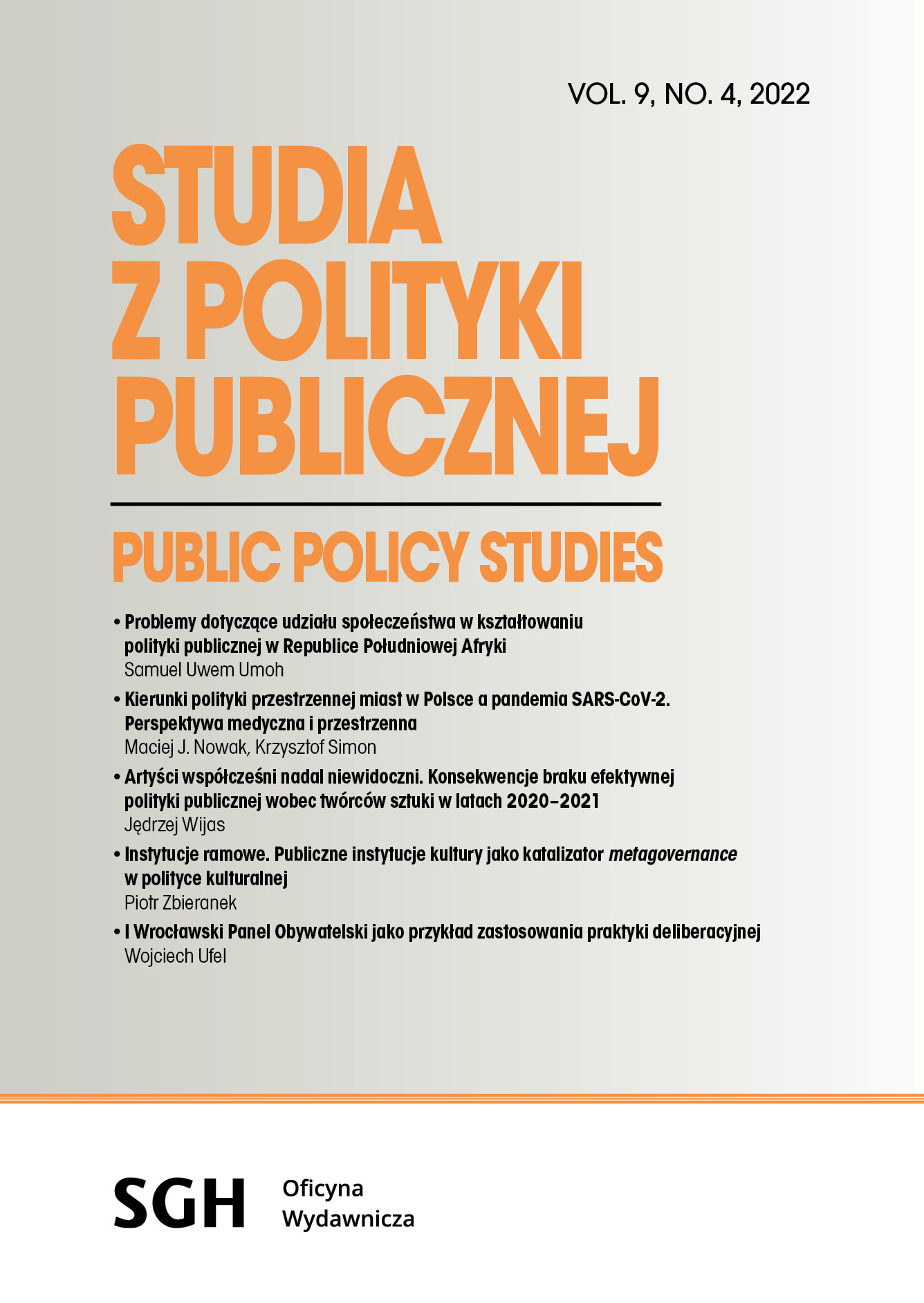
Main Article Content
Abstract
The effectiveness of representative democracy in South Africa is questionable, given the lack of confidence in the Parliament and the recurring service delivery protests, which indicate that citizens' opinions are unheard. Due to this, the Members of Parliament (MPs) devise strategies such as democratic innovation to involve citizens in policymaking as the platform for deliberation. Given this context, the paper discusses public participation in policymaking and how declining confidence in the Parliament necessitates democratic innovations as a panacea for increasing citizens' participation in Parliament activities. The paper also identifies dilemmas that occur in public involvement. Data was generated by interviews (with 16 MPs), observation of plenary debates, minutes of the Parliament, Hansard, minutes of Select and Standing Committees, and Parliamentary speeches. Findings suggest that despite the complexity of implementing public participation in South Africa, the Parliament has made significant progress since 1994 in widening democratic innovation to facilitate public participation. However, disadvantaged people continue to be marginalized from policymaking. The paper suggests that there is a need for political education and public participation in policymaking to strengthen democratic institutions in South Africa.
Keywords
Article Details
The journal of “Studia z Polityki Publicznej/Public Policy Studies” provides access to the content of articles in the Open Access mode on the basis of the Creative Commons license Attribution 4.0 International (CC BY 4.0).

More information: Open Access Policy of the "Studia z Polityki Publicznej/Public Policy Studies"
References
- Allen, P., Cairney, P. (2017). What do we mean when we talk about the 'political class'? Political Studies Review, 15 (1): 18-27.
- Aström, J. (2019). Citizen Participation. In: A. M. Orum (Ed.), The Wiley Blackwell Encyclopedia of Urban and Regional Studies (pp. 1-4). London: Wiley-Blackwell. DOI: 10.1002/9781118568446.eurs0441
- Booysen, S. (2014). Electorate reconfigures multiparty. Sunday Independent, https://www.iol.co.za/sundayindependent/electoratereconfiguresmultipartyism-1.1686374#.U38RkiggU24 (accessed: 15.11.2021).
- Corrigan, T. (2017). Democratic devolution: Structuring citizen participation in sub-national governance. Johannesburg: South African Institute of International Affairs. https://www.africaportal.org/documents/17508/saia_sop_263_corrigan_20170724.pdf (accessed: 15.11.2021).
- Creswell, J. W. (2014). Research Design: Qualitative, Quantitative and Mixed Methods Approaches (4th ed.). Thousand Oaks, CA: Sage.
- Dahlin, E. (2021). Email Interviews: A Guide to Research Design and Implementation. International Journal of Qualitative Methods. First online. DOI: 10.1177/16094069211025453
- Dawson, C. (2019). Introduction to Research Methods: A Practical Guide for Anyone Undertaking a Research Project, 5th ed. London: Robinson.
- Department of Planning Monitoring and Evaluation (2015). Socio-Economic Impact Assessment System (SEIAS), https://www.dpme.gov.za/keyfocusareas/Socio%20Economic%20Impact%20Assessment%20System/Pages/default.aspx (accessed: 15.07.2022).
- Eckerd, A., Heidelberg, R. L. (2020). 'Administering public participation', American Review of Public Administration 50 (2): 133-147. DOI: 10.1177/0275074019871368
- Elstub, S., Escobar, O. (Eds.). (2019). Handbook of democratic innovation and governance. Cheltenham, UK: Edward Elgar Publishing.
- Emmenegger, P., Walter, A. (2019). When dominant parties adopt proportional representation: The mysterious case of Belgium. European Political Science Review, 11 (4): 433-450. DOI: 10.1017/S1755773919000225
- Ferrer, J. (2020). The Effects of Proportional Representation on Election Lawmaking in Aotearoa New Zealand. Master's Thesis. Otago: University of Otago, http://hdl.handle.net/10523/10039 (accessed: 15.11.2021).
- Floridia, A. (2017). From participation to deliberation: A critical genealogy of deliberative democracy. London: ECPR Press, Rowman & Littlefield.
- Gumede, W. (2021). Delivering Democratic Developmental State Cities in South Africa. African Journal of Public Affairs, 12 (1): 1-27.
- Gyan, C. (2021). Community development participation scale: A development and validation study,' Community Development 52 (4): 459-472. DOI: 10.1080/15575330.2021.1885049p.2
- Hill, M., Varone, F. (2017). The Public Policy Process. 7th Edition. New York, NY: Routledge.
- Kabingesi, A. (2021). An Assessment of Public Participation in the Lawmaking and other Activities of the Parliament of the Republic of South Africa. Master's Thesis. Stellenbosch: Stellenbosch University.
- Khanyile, S. S. T. (2015). Evaluation of the effectiveness of public participation in the Gauteng electronic tolling programme. Ph. D. Thesis. Johannesburg: University of Johannesburg.
- Lassance, A. (2020, 10 Nov). What Is a Policy and What Is a Government Program? A Simple Question with No Clear Answer, Until Now. Rochester, NY. DOI: 10.2139/ssrn.3727996
- Letlhogonolo, L. (2020, 17 April). Where are constituency offices in a crisis?. https://mg.co.za/article/2020-04-17-where-are-constituency-offices-in-a-crisis/ (accessed: 15.07.2022).
- Loeper, A. (2016). Cross-border externalities and cooperation among representative democracies. European Economic Review, 91: 180-208.
- Madumo, O. S. (2014). Fostering effective service delivery through public participation. A South African local government perspective. Administration Publica, 22 (3): 130-147.
- Mankuebe, K., Manicom, D. (2020). Public participation in public policy making: the case of the Lesotho National Decentralisation Policy. Journal of Public Administration, 55 (3): 370-384.
- Martin, K., Aström, J. Magnus, A. (2020). Democratic Innovation in Times of Crisis: Exploring Changes in Social and Political Trust. Policy & Internet, 13 (1): 113-133.
- Masuku, S., Macheka, T., (2020). Policy making and governance structures in Zimbabwe: Examining their efficacy as a conduit to equitable participation (inclusion) and social justice for rural youths. Cogent Social Sciences, 7: Article 1855742. DOI: 10.1080/23311886.2020.1855742
- Mbete, L. (2016). An evaluation of oversight and accountability by the fourth parliament of the Republic of South Africa. Master's Thesis. Stellenbosch: Stellenbosch University.
- Michela, P. (2018). Which European countries use proportional representation? Electoral Reform Society, https://www.electoral-reform.org.uk/which-european-countries-use-proportional-representation/ (accessed: 15.11.2021).
- Ngcaweni, B., (2019.) Towards a Ten Theses of Effective Public Policy. Presentation at the China-Africa Institute and Human Sciences Research Council International Conference, Pretoria.
- Oni, S., Oni, A. A., Ibietan, J., Deinde-Adedeji, G. O., (2020). E-consultation and the quest for inclusive governance in Nigeria. Cogent Social Sciences. 6 (1): Article 1823601. DOI: 10.1080/23311886.2020.1823601
- Osei, A. (2018). Elite Theory and Political Transitions: Networks of Power in Ghana and Togo. Comparative Politics, 51 (1): 21-40.
- Parliament of South Africa (2018a). Annual Report 2018/19. Cape Town: Parliament.
- Parliament of South Africa (2018b). In Session, https://www.parliament.gov.za/storage/app/media/Publications/InSession/2017-08/final.pdf (accessed: 15.07.2022).
- Parliament of South Africa (2018c). Taking Parliament to the People - 27 to August 30, 2018, https://www.parliament.gov.za/project-event-details/34 (accessed: 15.11.2021).
- Parliament of South Africa (2021). Annual Reports, https://www.parliament.gov.za/business-publications (accessed: 15.11.2021).
- Parvin, P. (2018). Democracy Without Participation: A New Politics for a Disengaged Era. Res Publica, 24: 31-52. DOI: 10.1007/s11158-017-9382-1
- Piombo, J., Nijzink, L. (2005). Electoral politics in South Africa: Assessing the first democratic decade. New York, NY: Palgrave Macmillan.
- Republic of South Africa (1996). The Constitution of the Republic of South Africa. Pretoria: Republic of South Africa, Government Printer, Pretoria.
- Republic of South Africa (2020). National Policy Development Framework, https://www.gov.za/sites/default/files/gcis_document/202101/national-policy-development-framework-2020.pdf (accessed: 15.11.2021).
- Seedat, S., Naidoo, L. (2015). The South African Parliament in 2015. Cape Town: Casac.
- Sefora, M. M. (2017). Public participation in parliament - Perspective on social media technology (SMT). Master's Thesis. Stellenbosch: Stellenbosch University.
- Smith, G. (2019). Design Matters: CBNRM and Democratic Innovation. Governance Discussion Paper, no. 3. Washington, DC: World Bank, https://openknowledge.worldbank.org/handle/10986/33080 (accessed: 15.11.2021).
- South African Government (2020). National Policy Development Framework 2020. Cape Town: South African Government.
- Tebogo, M. (2018). A Critical Analysis of the Role and Effect of Public Participation in the Creation and Enforcement of Municipal by-Laws in South Africa. Pretoria: University of Pretoria.
- Van Holm, E. J., (2019). Unequal cities, unequal participation: The effect of income inequality on civic engagement. American Review of Public Administration 49 (2): 135-144. DOI: 10.1177/0275074018791217
References
Allen, P., Cairney, P. (2017). What do we mean when we talk about the 'political class'? Political Studies Review, 15 (1): 18-27.
Aström, J. (2019). Citizen Participation. In: A. M. Orum (Ed.), The Wiley Blackwell Encyclopedia of Urban and Regional Studies (pp. 1-4). London: Wiley-Blackwell. DOI: 10.1002/9781118568446.eurs0441
Booysen, S. (2014). Electorate reconfigures multiparty. Sunday Independent, https://www.iol.co.za/sundayindependent/electoratereconfiguresmultipartyism-1.1686374#.U38RkiggU24 (accessed: 15.11.2021).
Corrigan, T. (2017). Democratic devolution: Structuring citizen participation in sub-national governance. Johannesburg: South African Institute of International Affairs. https://www.africaportal.org/documents/17508/saia_sop_263_corrigan_20170724.pdf (accessed: 15.11.2021).
Creswell, J. W. (2014). Research Design: Qualitative, Quantitative and Mixed Methods Approaches (4th ed.). Thousand Oaks, CA: Sage.
Dahlin, E. (2021). Email Interviews: A Guide to Research Design and Implementation. International Journal of Qualitative Methods. First online. DOI: 10.1177/16094069211025453
Dawson, C. (2019). Introduction to Research Methods: A Practical Guide for Anyone Undertaking a Research Project, 5th ed. London: Robinson.
Department of Planning Monitoring and Evaluation (2015). Socio-Economic Impact Assessment System (SEIAS), https://www.dpme.gov.za/keyfocusareas/Socio%20Economic%20Impact%20Assessment%20System/Pages/default.aspx (accessed: 15.07.2022).
Eckerd, A., Heidelberg, R. L. (2020). 'Administering public participation', American Review of Public Administration 50 (2): 133-147. DOI: 10.1177/0275074019871368
Elstub, S., Escobar, O. (Eds.). (2019). Handbook of democratic innovation and governance. Cheltenham, UK: Edward Elgar Publishing.
Emmenegger, P., Walter, A. (2019). When dominant parties adopt proportional representation: The mysterious case of Belgium. European Political Science Review, 11 (4): 433-450. DOI: 10.1017/S1755773919000225
Ferrer, J. (2020). The Effects of Proportional Representation on Election Lawmaking in Aotearoa New Zealand. Master's Thesis. Otago: University of Otago, http://hdl.handle.net/10523/10039 (accessed: 15.11.2021).
Floridia, A. (2017). From participation to deliberation: A critical genealogy of deliberative democracy. London: ECPR Press, Rowman & Littlefield.
Gumede, W. (2021). Delivering Democratic Developmental State Cities in South Africa. African Journal of Public Affairs, 12 (1): 1-27.
Gyan, C. (2021). Community development participation scale: A development and validation study,' Community Development 52 (4): 459-472. DOI: 10.1080/15575330.2021.1885049p.2
Hill, M., Varone, F. (2017). The Public Policy Process. 7th Edition. New York, NY: Routledge.
Kabingesi, A. (2021). An Assessment of Public Participation in the Lawmaking and other Activities of the Parliament of the Republic of South Africa. Master's Thesis. Stellenbosch: Stellenbosch University.
Khanyile, S. S. T. (2015). Evaluation of the effectiveness of public participation in the Gauteng electronic tolling programme. Ph. D. Thesis. Johannesburg: University of Johannesburg.
Lassance, A. (2020, 10 Nov). What Is a Policy and What Is a Government Program? A Simple Question with No Clear Answer, Until Now. Rochester, NY. DOI: 10.2139/ssrn.3727996
Letlhogonolo, L. (2020, 17 April). Where are constituency offices in a crisis?. https://mg.co.za/article/2020-04-17-where-are-constituency-offices-in-a-crisis/ (accessed: 15.07.2022).
Loeper, A. (2016). Cross-border externalities and cooperation among representative democracies. European Economic Review, 91: 180-208.
Madumo, O. S. (2014). Fostering effective service delivery through public participation. A South African local government perspective. Administration Publica, 22 (3): 130-147.
Mankuebe, K., Manicom, D. (2020). Public participation in public policy making: the case of the Lesotho National Decentralisation Policy. Journal of Public Administration, 55 (3): 370-384.
Martin, K., Aström, J. Magnus, A. (2020). Democratic Innovation in Times of Crisis: Exploring Changes in Social and Political Trust. Policy & Internet, 13 (1): 113-133.
Masuku, S., Macheka, T., (2020). Policy making and governance structures in Zimbabwe: Examining their efficacy as a conduit to equitable participation (inclusion) and social justice for rural youths. Cogent Social Sciences, 7: Article 1855742. DOI: 10.1080/23311886.2020.1855742
Mbete, L. (2016). An evaluation of oversight and accountability by the fourth parliament of the Republic of South Africa. Master's Thesis. Stellenbosch: Stellenbosch University.
Michela, P. (2018). Which European countries use proportional representation? Electoral Reform Society, https://www.electoral-reform.org.uk/which-european-countries-use-proportional-representation/ (accessed: 15.11.2021).
Ngcaweni, B., (2019.) Towards a Ten Theses of Effective Public Policy. Presentation at the China-Africa Institute and Human Sciences Research Council International Conference, Pretoria.
Oni, S., Oni, A. A., Ibietan, J., Deinde-Adedeji, G. O., (2020). E-consultation and the quest for inclusive governance in Nigeria. Cogent Social Sciences. 6 (1): Article 1823601. DOI: 10.1080/23311886.2020.1823601
Osei, A. (2018). Elite Theory and Political Transitions: Networks of Power in Ghana and Togo. Comparative Politics, 51 (1): 21-40.
Parliament of South Africa (2018a). Annual Report 2018/19. Cape Town: Parliament.
Parliament of South Africa (2018b). In Session, https://www.parliament.gov.za/storage/app/media/Publications/InSession/2017-08/final.pdf (accessed: 15.07.2022).
Parliament of South Africa (2018c). Taking Parliament to the People - 27 to August 30, 2018, https://www.parliament.gov.za/project-event-details/34 (accessed: 15.11.2021).
Parliament of South Africa (2021). Annual Reports, https://www.parliament.gov.za/business-publications (accessed: 15.11.2021).
Parvin, P. (2018). Democracy Without Participation: A New Politics for a Disengaged Era. Res Publica, 24: 31-52. DOI: 10.1007/s11158-017-9382-1
Piombo, J., Nijzink, L. (2005). Electoral politics in South Africa: Assessing the first democratic decade. New York, NY: Palgrave Macmillan.
Republic of South Africa (1996). The Constitution of the Republic of South Africa. Pretoria: Republic of South Africa, Government Printer, Pretoria.
Republic of South Africa (2020). National Policy Development Framework, https://www.gov.za/sites/default/files/gcis_document/202101/national-policy-development-framework-2020.pdf (accessed: 15.11.2021).
Seedat, S., Naidoo, L. (2015). The South African Parliament in 2015. Cape Town: Casac.
Sefora, M. M. (2017). Public participation in parliament - Perspective on social media technology (SMT). Master's Thesis. Stellenbosch: Stellenbosch University.
Smith, G. (2019). Design Matters: CBNRM and Democratic Innovation. Governance Discussion Paper, no. 3. Washington, DC: World Bank, https://openknowledge.worldbank.org/handle/10986/33080 (accessed: 15.11.2021).
South African Government (2020). National Policy Development Framework 2020. Cape Town: South African Government.
Tebogo, M. (2018). A Critical Analysis of the Role and Effect of Public Participation in the Creation and Enforcement of Municipal by-Laws in South Africa. Pretoria: University of Pretoria.
Van Holm, E. J., (2019). Unequal cities, unequal participation: The effect of income inequality on civic engagement. American Review of Public Administration 49 (2): 135-144. DOI: 10.1177/0275074018791217