


Published: Mar 5, 2021
Full Issue
Articles

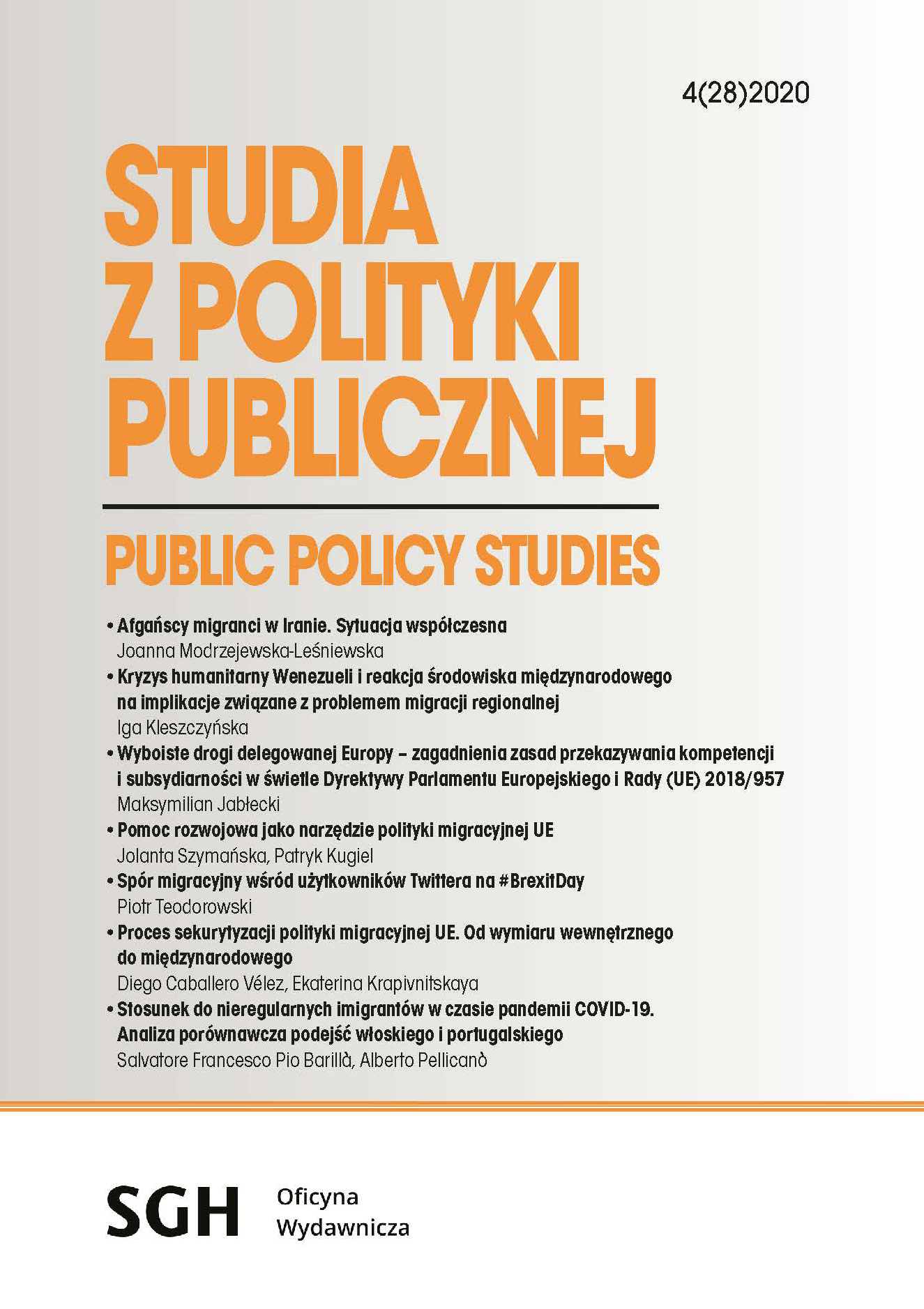
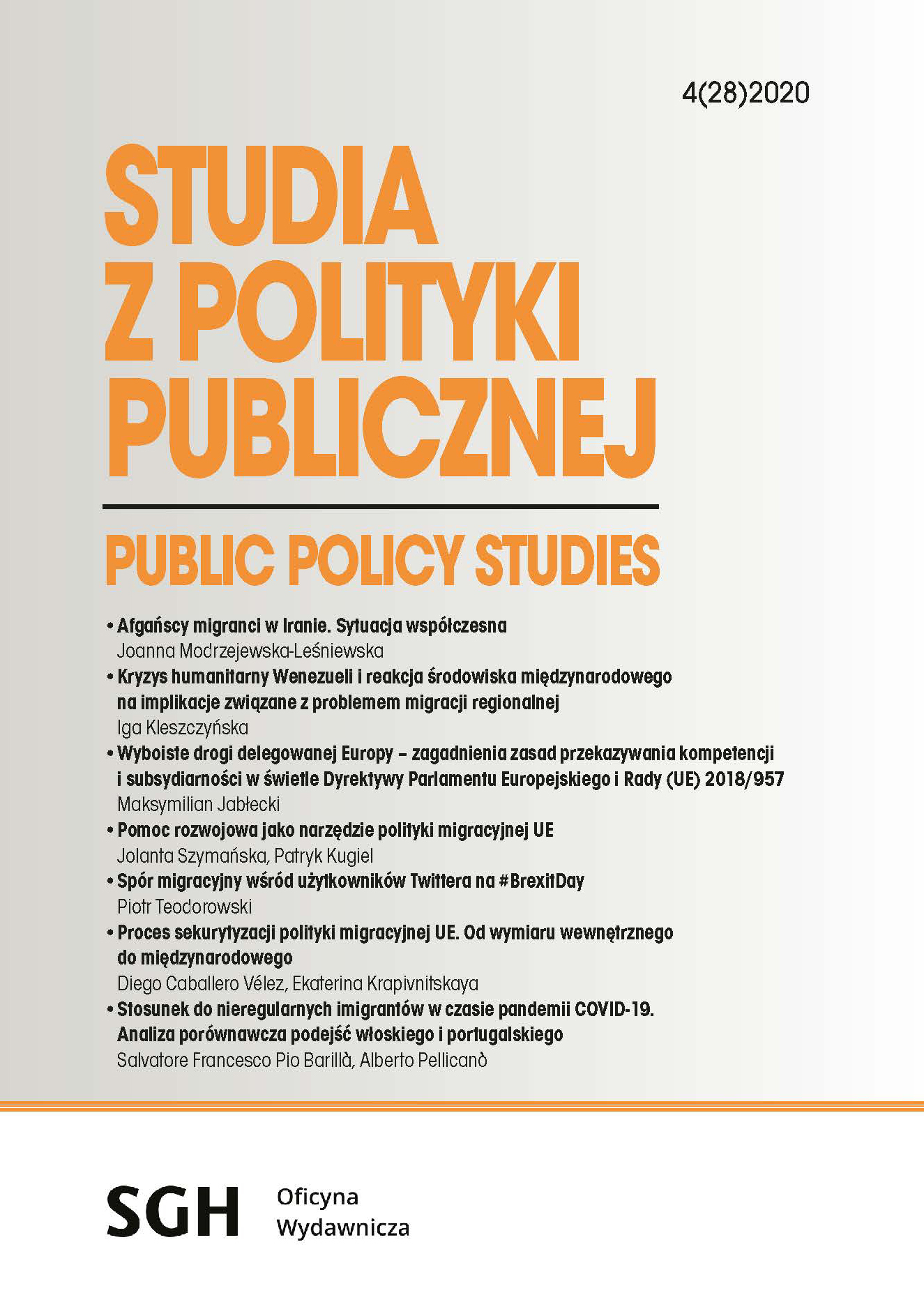

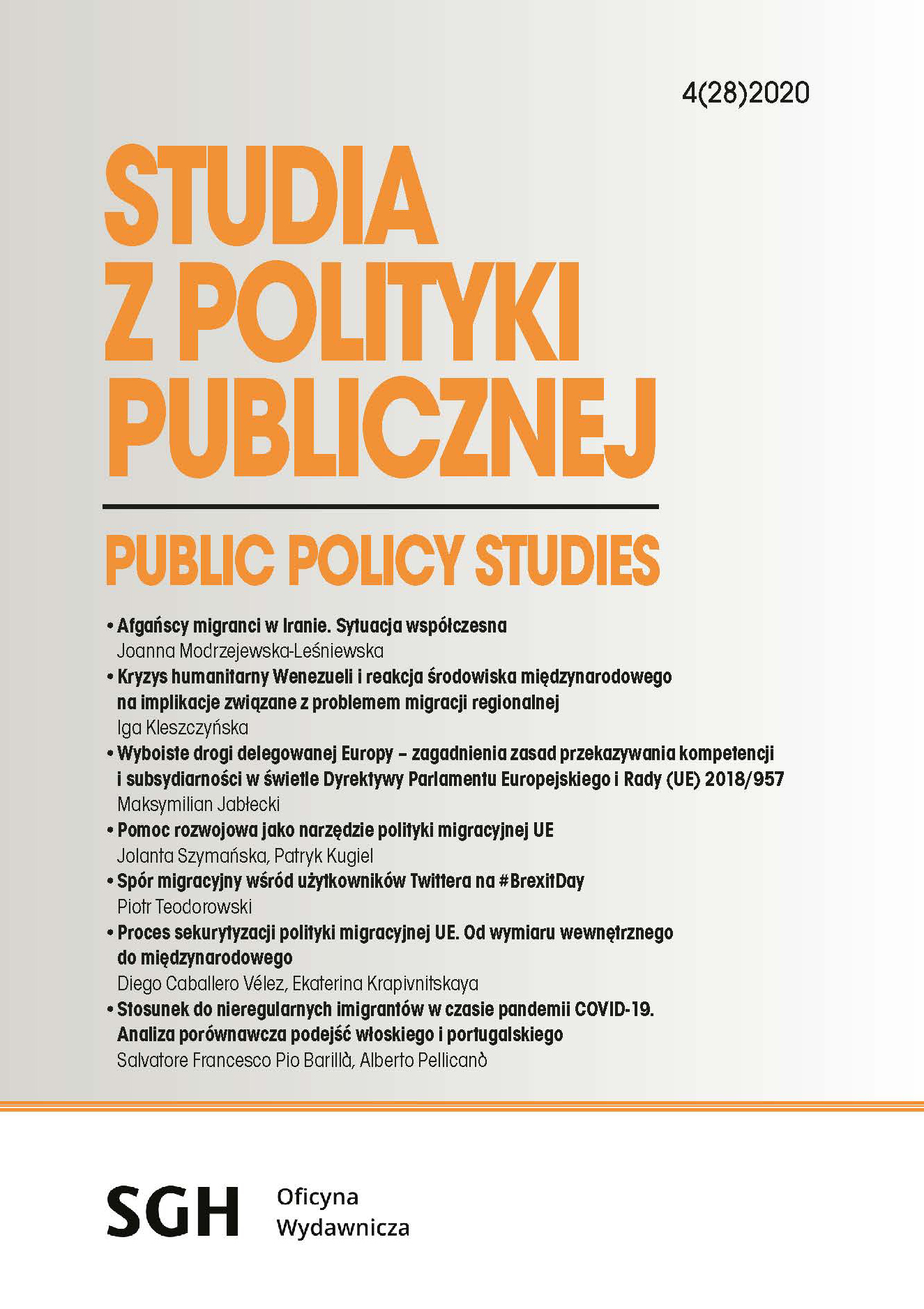

The journal “Studia z Polityki Publicznej / Public Policy Studies” is a quarterly journal that publishes academic papers. Its profile refers to the Anglo-Saxon analytic tradition known as public policy.
The articles focus on the issues of public policy in its various dimensions, including:
We kindly invite you to submit papers devoted to economic, social (e.g., welfare, social security) or infrastructural (e.g., energy, transport) policies, as well as policies regarding education, higher education and horizontal policies (e.g., regional policy, public strategies).
Scientific Disciplines
Ministry of Education and Science, Poland: health sciences, economics and finance, political and administrative sciences, sociological sciences
Organisation for Economic Co-operation and Development Fields of Science and Technology (OECD FOS): health sciences, economics and business, political science, social and economic geography, sociology
The journal is a diamond Open Access publication, indexed in the Directory of Open Access Journals (DOAJ) - meeting requirements for Open Access publishing.
Key Information
Journal name: Studia z Polityki Publicznej / Public Policy Studies
ISSN: 2391-6389
eISSN: 2719-7131
Editor-in-Chief: Andrzej Zybała (SGH)
Publisher: Collegium of Socio-Economics, SGH Warsaw School of Economics
in collaboration with: SGH Publishing House - SGH Warsaw School of Economics, Poland
Register of newspapers and magazines: PR 18551, Warsaw District Court, VII Civil Registry Division, Poland
Establishment year: 2014
Editorial contact: kwartalnikSPP@sgh.waw.pl
Principal contact: Anna Anetta Janowska (SGH), secretary of the editorial board,, ajanows@sgh.waw.pl
Frequency: 4 issues per year
Review process: double-blind peer review
Article Processing Charges (APCs): None
Submission fee: None
License: The journal of “Studia z Polityki Publicznej/Public Policy Studies” provides access to the content of articles in the diamond Open Access mode on the basis of the Creative Commons license Attribution 4.0 International (CC BY 4.0).
Indexing: among others the databases BazEkon, Central and Eastern European Online Library (CEEOL), CrossRef, Google Scholar, Directory of Open Access Journals (DOAJ), ERIH PLUS, Free Journal Network (FJN), Polska Bibliografia Naukowa (PBN), Lens, Dimensions, Scite, Scilit, Baidu Scholar, NAVER, Korea Open Access Platform for Researchers (KOAR), Informationsdienst Politikwissenschaft (POLLUX), International Political Science Abstracts (IPSA), J-Gate, Research Papers in Economics (RePEc), Bielefeld Academic Search Engine (BASE), Gale Academic OneFile, China National Knowledge Infrastructure (CNKI), EBSCOhost, HeinOnline.
Archiving: The National Library of Poland, the Library of the SGH Warsaw School of Economics, the Fatcat system of Internet Archive, PKP Preservation Network (PKP PN) included in The Keepers registry.
Author Self-Archiving Policy: This journal permits and encourages authors to post items submitted to the journal on personal websites or institutional repositories both prior to and after publication.
Social networks: Facebook
Published: Mar 5, 2021
